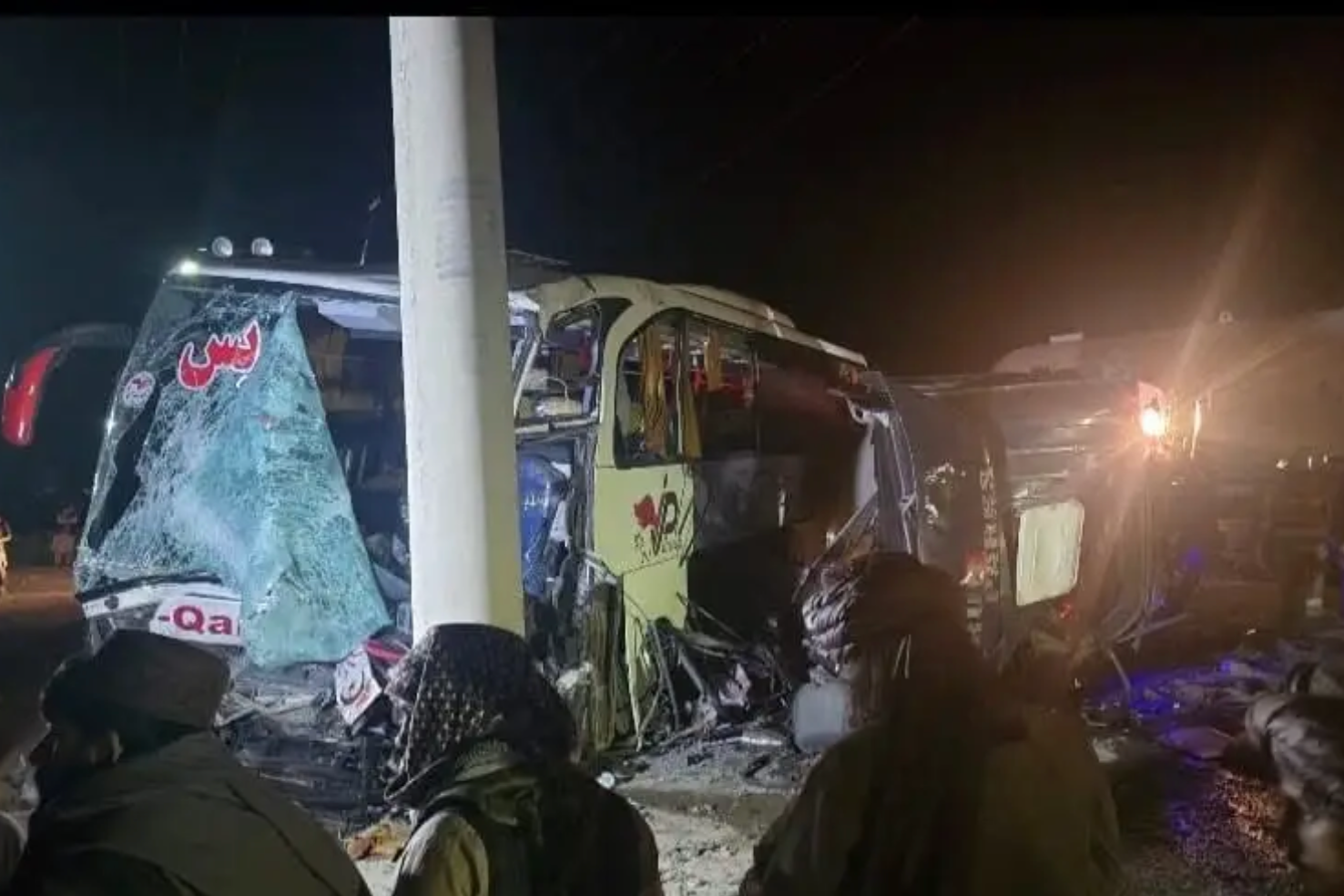
GHAZNI, Afghanistan — A severe traffic collision involving a passenger bus and a commercial cargo trailer has left two people dead and 29 others injured in eastern Afghanistan’s Ghazni province, local authorities confirmed Sunday.
The incident occurred at approximately 10:00 p.m. on Saturday night along the Rawza Pass (Rawza Kotal), a critical transport corridor situated near the provincial capital of Ghazni City.
Abu Khalid Sarhadi, a spokesperson for the local police command in Ghazni, stated early Sunday that emergency services were deployed immediately to the scene. According to official reports, the casualties include 11 women. While the majority of the wounded are currently receiving treatment at Ghazni Provincial Hospital, medical officials noted that eight of the injured remain in critical condition.
Preliminary investigations conducted by traffic authorities cite low visibility due to darkness alongside severe driver negligence as the primary catalysts for the head-on collision.
The fatal crash underscores a mounting public safety crisis on Afghanistan’s highways. The country has witnessed a sharp spike in transit-related fatalities over the last 48 hours alone. On Friday, a high-speed collision on the outskirts of Imam Sahib district in the northern Kunduz province claimed the lives of five young people. Just one day prior, a separate accident involving a truck and a motorcycle in northern Baghlan province resulted in three additional fatalities.
Independent transportation experts and local motorists consistently point to a lethal combination of infrastructure neglect and unregulated driving practices across the country. Decades of conflict have left major national highways dilapidated and lacking basic traffic signage or illumination. Compounding the risk, a widespread disregard for speed limits, overspeeding, and the extensive use of poorly maintained, aging vehicles continue to make traffic accidents one of the leading causes of non-conflict-related deaths in Afghanistan.