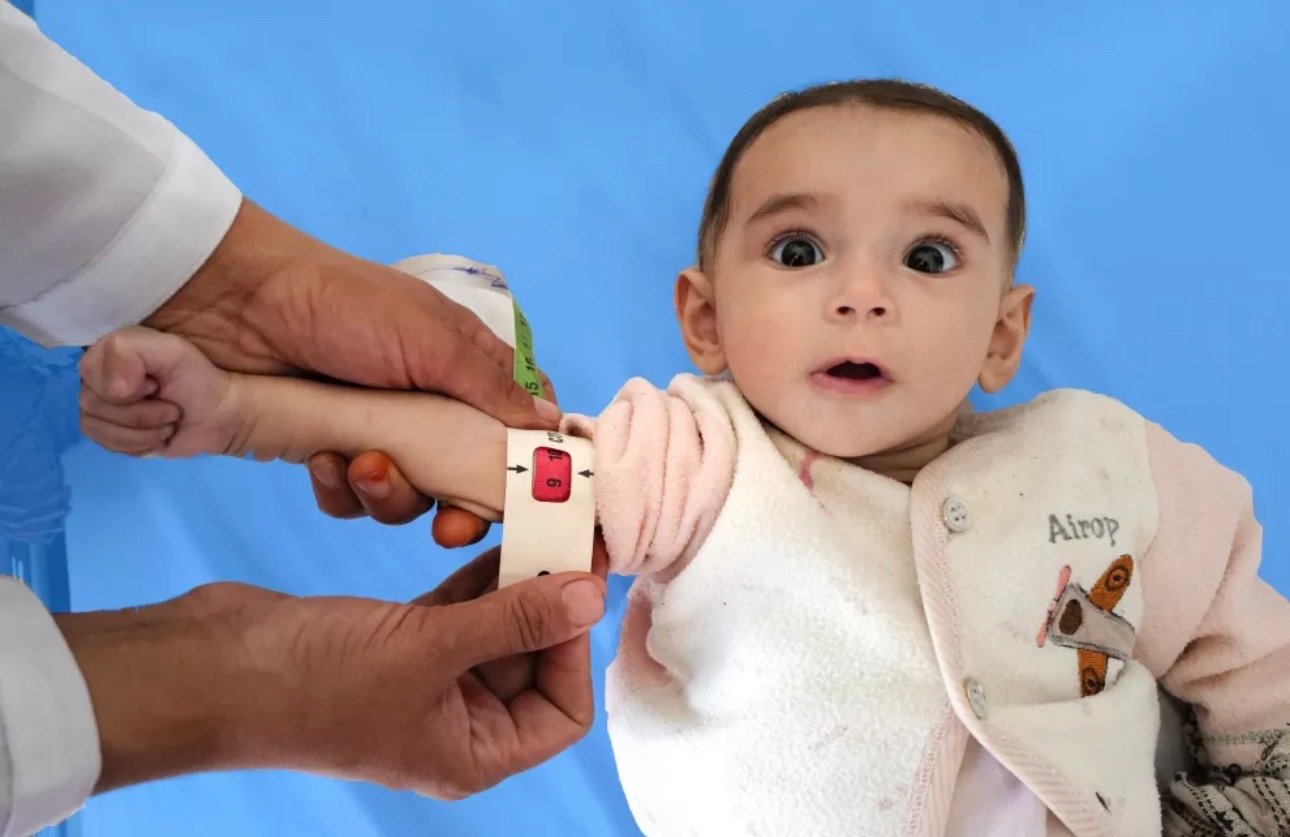
KABUL — The United Nations Office for the Coordination of Humanitarian Affairs (OCHA) released a stark assessment on Monday, June 15, 2026, announcing that 3.7 million children in Afghanistan are currently suffering from acute malnutrition. The agency warned that immediate, scaled-up international funding is vital to prevent catastrophic loss of life and permanent developmental damage among the country’s most vulnerable populations.
The detailed humanitarian report highlights an expanding nutritional crisis that threatens to worsen significantly as the country approaches its peak wasting season next month.
According to OCHA, the baseline of humanitarian need across Afghanistan remains critically elevated, driven by systemic economic fragility and disrupted supply chains. Within the projected figures, aid agencies expect to record hundreds of thousands of high-risk, severe cases among young children if preventive interventions are not aggressively funded.
The crisis is also disproportionately impacting maternal health. The report projects that approximately 1.2 million pregnant and breastfeeding women across the country will be acutely affected by malnutrition over the course of 2026, compounding the strain on an already fragile rural healthcare infrastructure.
A Catastrophic Underfunding Gap
The core of OCHA’s briefing stresses that while the technical frameworks for nutrition and famine-prevention programs exist on the ground, operations are being severely throttled by an acute lack of flexible global funding.
UN officials warned that without a rapid injection of capital from international donors, humanitarian actors will be forced to implement deep cuts to life-saving operations. The inability to sustain these programs risks triggering irreversible physical and cognitive consequences for an entire generation of Afghan youth. OCHA reiterated that silence or delay from the international community at this stage will directly translate into preventable casualties on the ground.